For anyone who has recently had a property renovated, you’ll know how much of a pain builders’ dust can be. Of course, it’s not their fault; it’s a natural byproduct of the job they’re doing, but we don’t blame you for wanting to know how to clean builders’ dust as efficiently and effectively as possible.
Dust can have an impact on your health as well as the appearance of your home, so it is vital that you deal with it effectively. As after-builders cleaning experts in London, here at Assertio Services, we know how to do just that. And we’re going to share exactly how to do it.
What You’ll Need Before You Start Cleaning
Before finding out how to clean builders’ dust, you need a handful of tools and products to ensure you can do the best possible job. Below is a list of recommended tools and products to have on hand:
- Industrial or HEPA vacuum – a standard vacuum will do a job, but a certified 3-stage HEPA vacuum will be most effective at filtering out dust particles.
- Microfibre cloths – you will need more than you think!
- Mild detergent / pH-neutral cleaner – can be found in supermarkets or online.
- Mop & bucket – consider getting a new mop head if you already have these at home.
- Protective gear – be sure to wear masks and gloves while dealing with dust.
HEPA filtration matters when cleaning construction dust, as it has an integrated filter system that is the most effective method of removing dust particles. They are especially effective at trapping allergens such as pollen, which could cause you to sneeze. We realise not everyone will have a HEPA vacuum, which is why many choose professional cleaning help.
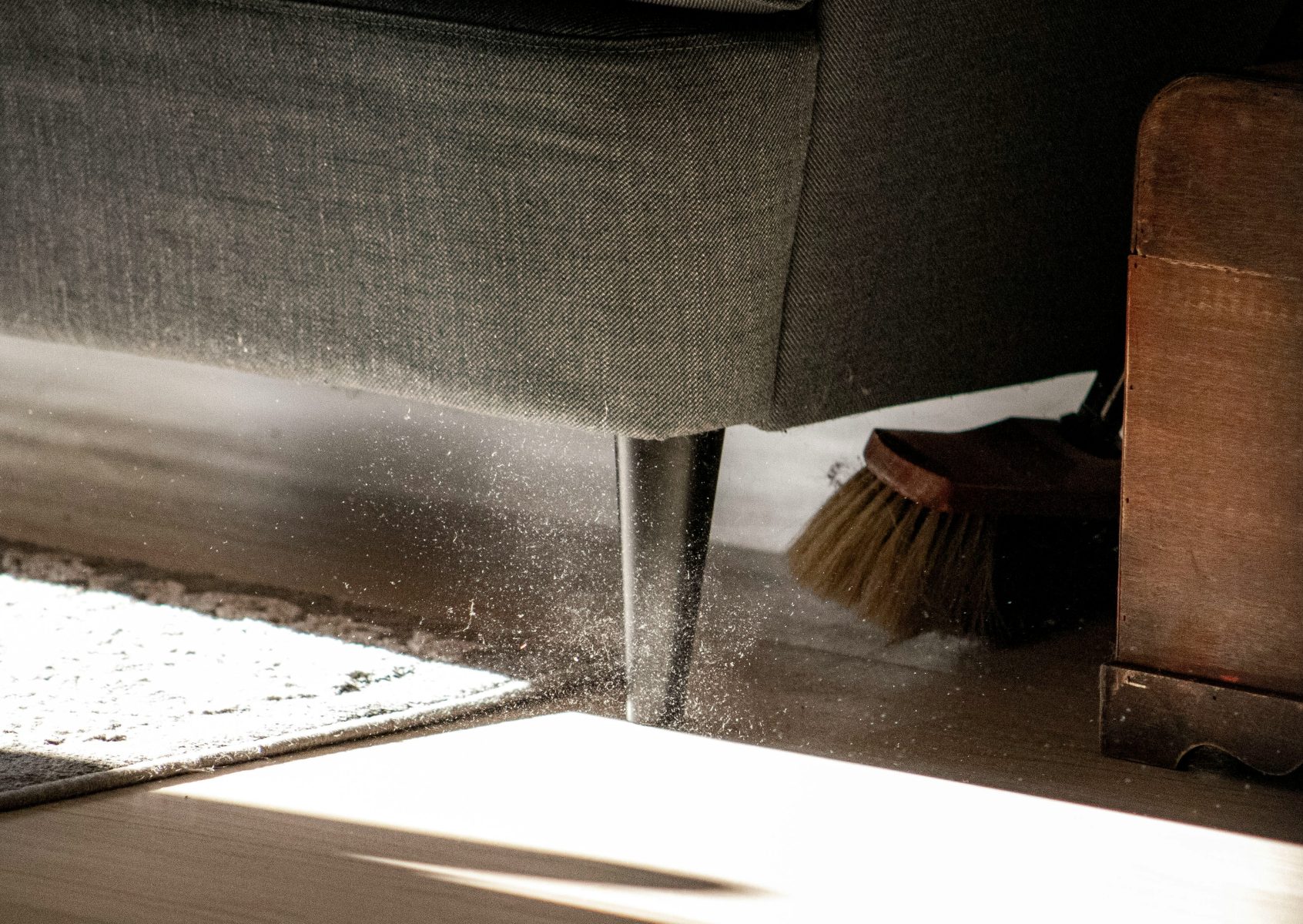
How to Clean Builders’ Dust Properly (3 Steps)
We have condensed our builder dust cleaning process down into 3 simple steps to help you effectively tackle construction dust in your newly renovated home. If you have any questions, please get in touch.
Step 1: Allow Dust to Settle
Always allow time for the dust to physically settle before attempting to clean. If it has not fully settled, you will find that you’re cleaning more than once, as the first clean will not be as effective. This is due to dust particles still being present in the air. For the dust to completely settle, we recommend waiting at least 72 hours. Then you can begin.
Step 2: Dry Dusting From Top to Bottom
The first tip when learning how to clean builder dust is to dust from the top to the bottom. Start with ceilings, light fittings, and shelves. Using your microfibre clothes, dry dust these areas with gentle strokes until the dust has visibly disappeared. Then, with an additional microfibre cloth, lightly moistened, go over the same areas to pick up fine and stubborn particles. Be careful not to go over anywhere that has been plastered with the wet cloth, as this could smear plaster dust.
Step 3: Vacuum Everything (More Than Once)
For those wanting to learn how to clean construction dust from floors, this next step is for you. Step 3 is the process of vacuuming everything several times. With the HEPA vacuum, go over walls, skirting boards, sockets, furniture, and floors. Like dusting with a microfibre cloth, vacuuming takes several passes as it collects the stubborn particles on the revisits.
How to Clean Construction Dust From Tile Floors (And Other Flooring Types)
Tile & Stone Floors
The first step for cleaning tile & stone floors is to dry vacuum. From here, grab your damp mop with pH-neutral cleaner and go over the tiles. Be sure to avoid using acidic cleaners on the grout in between tiles, as this solution can damage the newly applied grout.
Wood & Laminate Floors
Cleaning recently laid wood and laminate floors requires minimal moisture, as this can damage the floor. For this type of floor, use a soft brush vacuum attachment to vacuum the majority of dust and allergens. Similar to before, you may need multiple passes. If there are remaining stains or you want to go the extra mile, use a specialist wood floor cleaner to tackle stubborn dust and dirt.
Carpets & Rugs
Cleaning carpets and rugs to free them of dust is where you will need a HEPA vacuum for the most effective results. If you do not have one, consider vacuuming and then passing on the task to professional cleaners.
Cleaning Dust From Hidden & Overlooked Areas
A final word needs to be said about looking to clean builders’ dust from places you didn’t think it was possible for it to gather. Below is a list of hidden and overlooked areas that can harbour just as much dust as any of the exposed areas.
- Skirting boards
- Door frames
- Vents
- Inside cupboards
- Wardrobes
- Window tracks
- Blinds
- Radiators
If you believe there is builders’ dust in your air circulation systems, you can take the cover off the system and do a brief clean, but it is more effective to call in professionals.
Why Choose Assertio Services for Builders’ Dust Cleaning in London
If this all sounds like too much, why not enlist the services of the after-builders cleaning experts in London? Our team is fully insured and highly trained to use professional-grade cleaning equipment, so you can be sure they will do the job properly. If your property has just been renovated and is in dire need of some expert after-builder cleaners, get in touch.


